History · Civilization
A Collection of Countries
How humanity organized, governed, and shaped our world, from the earliest communities and ancient civilizations to the nations of today.
About the book
How did one shared world become today’s remarkable collection of countries?
Long before there were countries, borders, monarchies, or elected governments, human beings were already learning how to live and work together. As families became settlements and settlements grew into cities, societies developed leadership, laws, trade, taxation, defence, public works, and increasingly complex systems of organization.
A Collection of Countries takes readers on a journey across time and continents, exploring how humanity progressed from early communities to city-states, kingdoms, empires, republics, constitutional monarchies, democracies, and the nations of today. Drawing upon history, science, and discoveries made through archaeology, the book examines what ancient cities, roads, water systems, monuments, and trading networks reveal about the people and governments that created them.
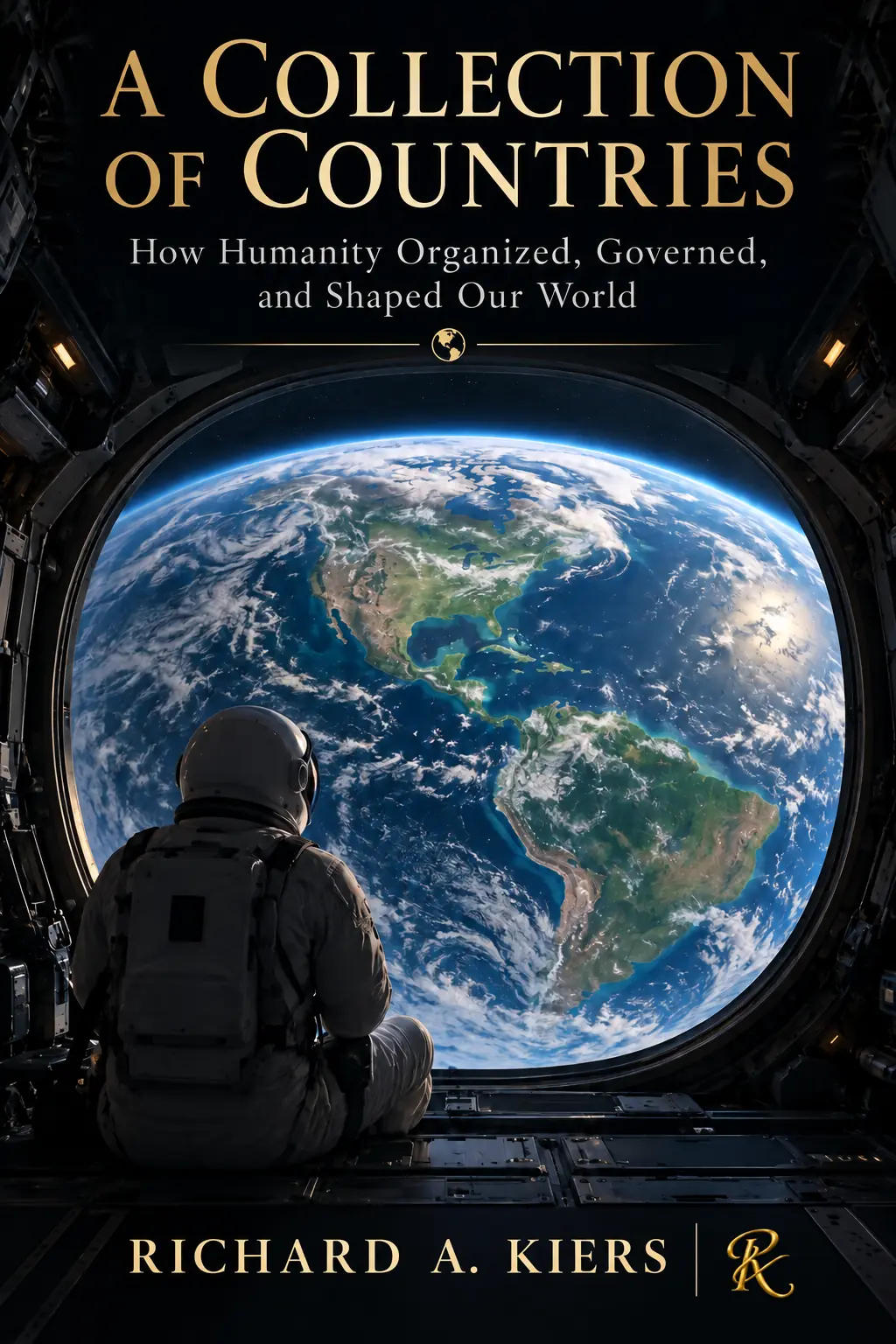
From space, Earth has no visible political borders. Yet across this shared planet, humanity has produced an extraordinary collection of countries, each shaped by geography, culture, migration, discovery, cooperation, conflict, and time. Informative, visually descriptive, and politically neutral, this is the continuing story of how humanity organized, governed, and shaped our world.